ANDREW KAGGWA
You can’t forget the first time you were at the cinema. Well, maybe you can forget the clothes you were putting on but definitely not the film you watched.
But I guess that only works for people that looked at cinema going as some kind of privilege, the ones that elevated you from your ordinary peers at school.
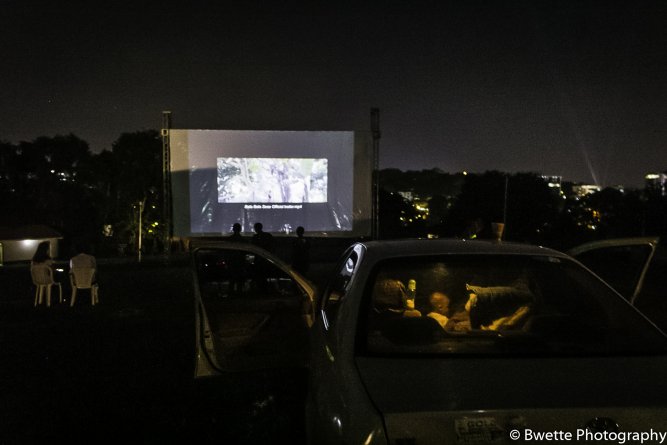
The drive-in cinema saw guests watch the opening film from behind their car windscreens
Then, there were no pirates in town thus, the only way you could have watched Titanic, Good Will Hunting or Men In Black only weeks after their official release was at the then William Street based Cineplex Cinema.
My first time was when Rush Hour, the first one from the series was making waves; I barely knew I was even watching a blockbuster considering the fact that the cinema hall was virtually empty.
On Wednesday, at the Uganda Museum, Amakula International Film Festival created yet another cinematic memory for many young film lovers with the very first drive-in showcase Uganda has seen in many years.
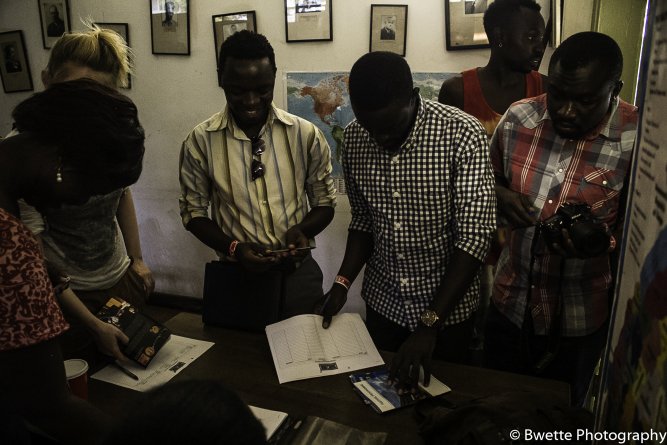
Guests arriving for the festival
It’s said that in the 1960s, the Cinema culture was at its peak and drive-ins were some sort of the ish – but thanks to our scratched past, none of these cultures even still exist. The years of turmoil before 1986 have since ensured that cinemas are almost inexistent and the few that were opened way later after stability are now struggling to attract an audience.
Thus, getting into Bala Bala Sese, the film that opened Amakula, the festival was faced with more than a problem, getting people come back to the cinemas and more so the already dead drive-ins and getting them sit through 102 minutes of a locally-produced film.
But it wasn’t just the drive-in that was crazy, for people without cars, the same movie was screening at the museum hall but unlike the traditional seats and screen kind of setting, they opted for mats and only a few seats.

Alice Smits, the festival’s outgoing director, talks to a guest
But it was the drive in that many people were very interested in, you could see that many were thrilled by the idea of sitting in their cars with headsets whose sound they could control to levels that suited them.
Adnad Senkumba’s prowess is best appreciated while watching this film with the sound projected in HD via the headsets, you could experience each and every detail of the sound including the little ants that helped create an ideal feel of a night in a village.
It could have been a drive in designed for people with cars, but the crowd at the festival opening wanted none of that, in fact, many of the people that had to sit in the main hall were seen coming with their mats to watch from the Museum gardens.
Even the fact that one would easily remove the headsets and receive a call without inconveniencing the people around was just magnificent.
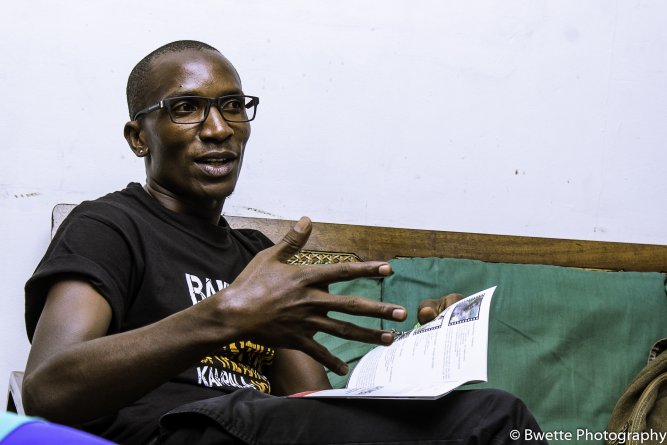
The festival’s new director, Faisal Kiwewa, addressing journalists at an earlier press briefing
Flora Aduk, an arts editor with the Daily Monitor noted that such drive-ins reminded her of those old movies where people used to go to drive-ins during outings – she said that she enjoyed watching the film with the cold breeze hitting her face. She abandoned her car for a mat.
Others liked a fact that they could walk about to the toilet but could still follow the audio part of the film.
Bala Bala Sese was massively appreciated by the audience at the Amakula tenth edition, and they commended Bashir Lukyamuzi, the director and Usama Mukwaya (writer) for telling a story that many Ugandans can easily relate and immerse in.
The festival will later today showcase multi-award winning B’ella from Malawi and Academy-nominated Timbuktu from Mali.